Peer-to-Peer Football Betting: How Exchanges Are Reshaping Fixed-Odds Markets
Ellis Otto · Nov 21, 2026
Peer-to-Peer Football Betting: How Exchanges Are Reshaping Fixed-Odds Markets
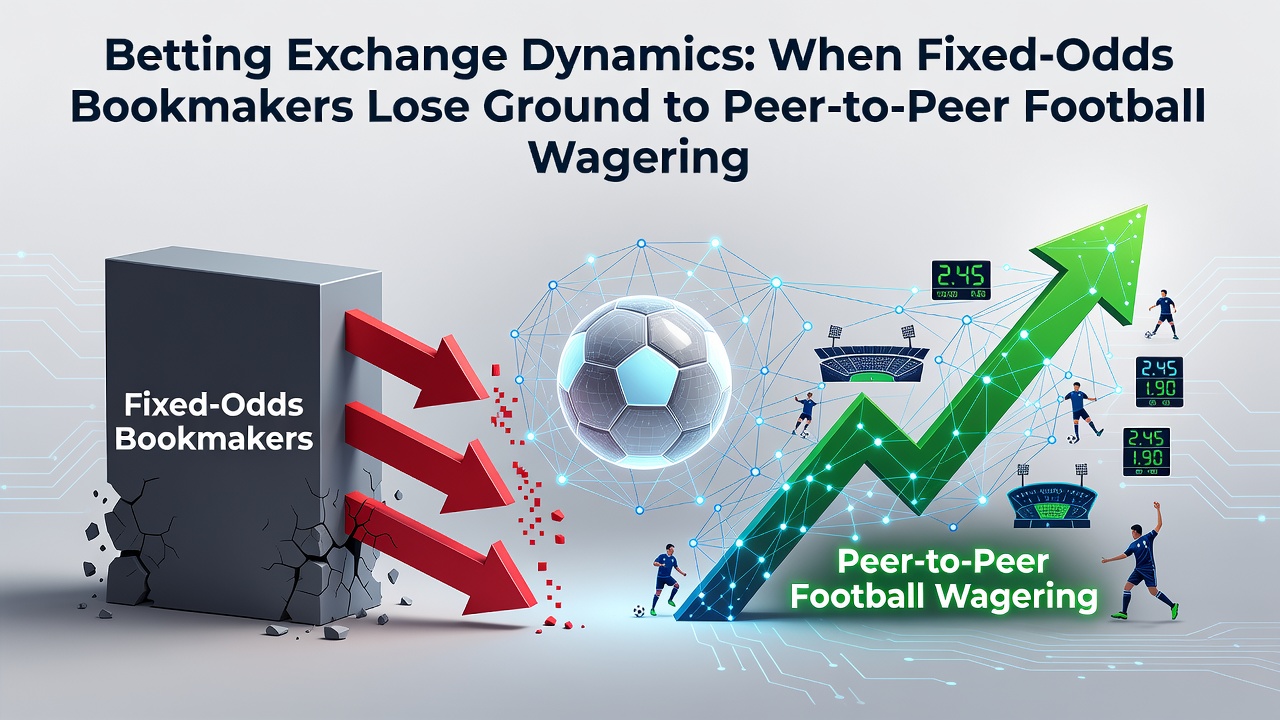
Football wagering has seen a clear shift toward peer-to-peer platforms in recent years, and data shows betting exchanges now handle a growing share of match markets that once belonged almost exclusively to fixed-odds operators. These platforms allow users to back and lay outcomes directly against each other, which creates different pricing dynamics and liquidity patterns compared with traditional bookmaker models. Observers note that the structure removes the bookmaker margin on every transaction, while the exchange itself collects a commission on winning bets only.
Core Differences Between the Two Systems
Fixed-odds bookmakers set prices in advance and adjust them according to liability and incoming stakes, whereas exchanges operate as order books where odds move purely on the balance of back and lay interest. This means a single market on a Premier League fixture can show tighter spreads on an exchange once sufficient liquidity arrives, and studies from academic researchers have documented how this liquidity concentrates around high-profile matches. Those who have examined transaction data find that lower-profile leagues sometimes lack depth on exchanges, leaving fixed-odds operators with an edge in those segments because they can still offer prices without waiting for opposing orders.
Volume Patterns Observed Through Late 2026
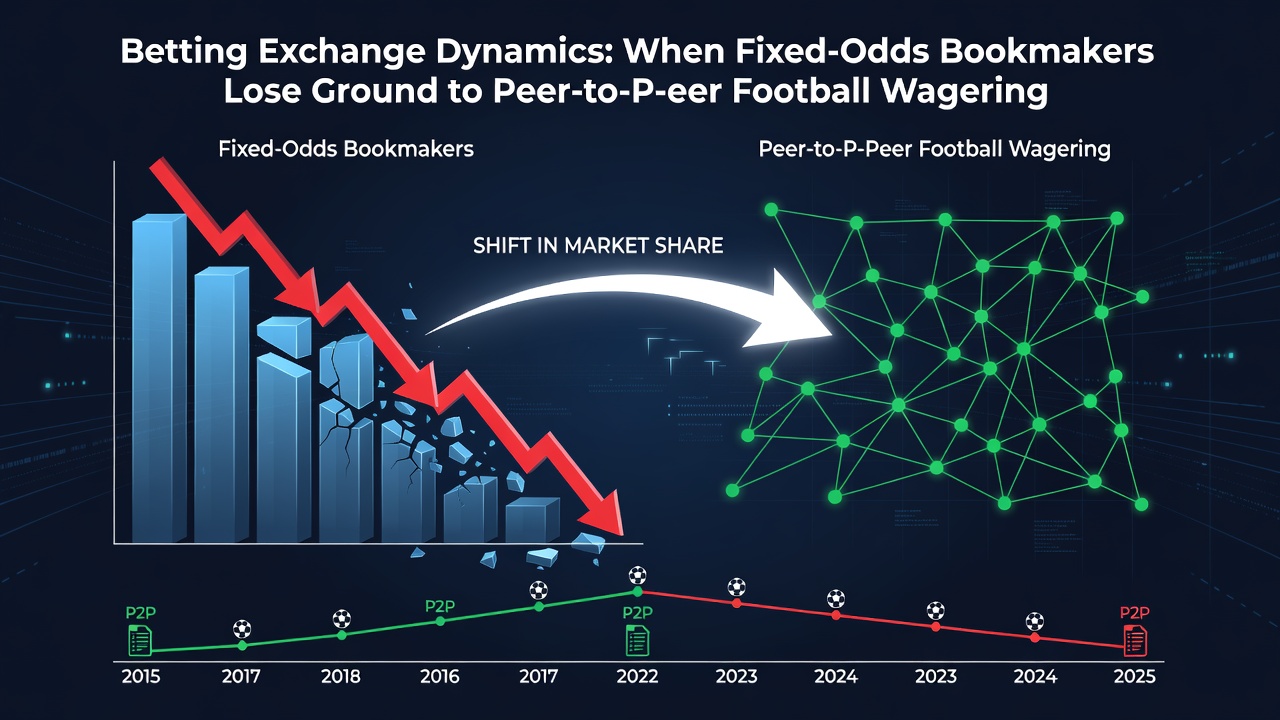
Industry figures compiled through November 2026 indicate that football accounted for the largest portion of exchange turnover across major European jurisdictions, with the highest activity recorded on live in-play markets. Researchers tracking these volumes report that exchange liquidity often surges after kick-off, allowing prices to respond faster to events on the pitch than many fixed-odds systems can match. At the same time, operators using traditional models have maintained stronger positions in outright tournament betting and ante-post specials, where exchange liquidity remains thinner outside major events.
Operational Advantages Driving the Shift
One advantage cited in multiple reports is the absence of a built-in overround on exchanges, which lets skilled users secure better value when they correctly identify mispriced outcomes. Data from a University of Nevada Las Vegas study on sports wagering mechanics shows that participants who consistently lay overpriced selections can achieve positive expected returns over large sample sizes, although variance remains high. Fixed-odds firms counter this by offering promotions such as boosted prices and insurance on accumulators, features that exchanges do not replicate in the same form. Those who have compared promotional uptake find that casual participants still gravitate toward these incentives even when headline exchange odds appear superior.
Regulatory and Risk Considerations Across Regions
Regulators in several jurisdictions have examined how peer-to-peer models affect consumer protection standards. A report issued by the Australian Gambling Research Centre highlighted differences in responsible gambling tools between the two formats, noting that exchange operators must still enforce self-exclusion lists and deposit limits yet face distinct challenges around in-play speed. Canadian provincial regulators have similarly reviewed liquidity requirements, while European trade associations have published guidance on market integrity for both structures. Observers tracking enforcement actions note that fixed-odds operators often absorb more direct liability on high-stakes bets, which can trigger faster risk management responses than the distributed matching seen on exchanges.
Market Response and Liquidity Trends
Traditional bookmakers have responded by expanding their own exchange-style products or by white-labeling liquidity from established platforms, moves that allow them to retain customers who prefer peer-to-peer pricing. Figures released by the European Gaming and Betting Association in late 2026 showed that several major operators now route a portion of football turnover through hybrid models that combine fixed odds with exchange feeds. This integration has helped stabilize margins while giving users access to tighter prices during peak liquidity windows. Researchers who analyzed order-book depth across seasons found that the most liquid exchange markets still cluster around the top five European leagues, leaving gaps that fixed-odds pricing continues to fill.
Conclusion
Football markets continue to demonstrate the clearest contrast between exchange and fixed-odds models, with volume data from 2026 confirming ongoing migration toward peer-to-peer formats in live betting segments. Both systems maintain distinct strengths depending on the type of wager and the level of liquidity available, and regulatory frameworks across multiple regions have adapted rules to address the operational differences. The resulting landscape shows coexistence rather than outright replacement, as participants select platforms according to the specific characteristics of each football market they wish to engage.